Le Architecture Hub donne accès à l'actualité d’EPFL Architecture au sein de la faculté ENAC et présente l’enseignement, les programmes de recherche, la gouvernance et les personnes au cœur de sa communauté. Le fonctionnement et l’organisation d’EPFL Architecture et l’écosystème de l’EPFL sont décrits dans le glossaire.
NRP 81 Session series BAUKULTUR: A EUROPEAN GENEALOGY Tuesday, 13 January 2026 (18:00 – 19:30) Venue: Archizoom, EPFL & ZOOM ID: 68258520857 The third and fourth sessions revisit various episodes of modernity and its critique. These undoubtedly continue to influence all cultural perceptions of architectural and urban production. As with the previous sessions, both begin with brief presentations, after which the floor is opened for discussion. Invited speakers Angelika Schnell, Vienna Irina Davidovici, Zurich Discussants Paola Viganò, Pierre Caye, Andri Gerber, Caspar Schärer
28.11.25 - Le Studio TEXAS de l'EPFL Architecture a remporté le Prix Swiss Arc 2025 dans la catégorie Next Generation. Félicitations aux étudiant·es et à l'équipe enseignante impliqués pour leur travail exceptionnel ! Hétérotopies En prenant pour point de départ le concept d’hétérotopie développé par Michel Foucault, les étudiants ont imaginé la transformation d’une barre d’habitations construite en 1955 à Sarcelles, en périphérie de Paris. Adoptant un regard attentif et engagé en faveur de la préservation de ce patrimoine moderne, ils ont exploré des manières d’étendre les qualités spatiales et matérielles de ces logements. Chaque groupe a développé un projet …
21.10.25 - The TRC-LC3 Prototype Pavilion, developed at EPFL Fribourg is exhibited at the 14th International Architecture Biennale of São Paulo. By exploring the structural, architectural, environmental, and social dimensions of TRC-LC3, the research highlights its potential for application in the Global South. The 14th International Architecture Biennale of São Paulo (@bienaldearquiteturasp) for an Overheated Planet, EXTREMOS, places an urgent question at the center of the dialogue: what is the role of architecture in a world facing extreme climate events and the very limits of human life, with the point of no return looming on the horizon? In line with …
21.10.25 - Dans le cadre de la thèse qu’il réalise actuellement en architecture à l’EPFL, Clément Cattin analyse comment adapter les lieux en pente aux défis de la ville durable. Il en résume les enjeux dans une chronique parue dans trois quotidiens romands. Les opérations de densification sont très présentes dans les villes suisses, mais leur attractivité reste faible au sein de la population. Les refus politiques sont de plus en plus fréquents. Comment continuer à répondre aux besoins de logements tout en assurant une qualité de vie en ville? Dans ma recherche doctorale en architecture et science de la …
14.10.25 - Une étude de l'EPFL montre que la lumière rouge, tout comme la lumière bleue, provoque un éblouissement plus important que la lumière blanche. Ceci remet en question une fonction de sensibilité centenaire de référence qui décrit la façon dont l'œil humain réagit aux différentes longueurs d'onde de la lumière, avec des implications sur les normes, la recherche et le confort visuel à l'intérieur des bâtiments. L'éblouissement causé par la lumière du soleil peut être une source majeure d'inconfort pour les occupantes et occupants d'un bâtiment. En particulier lorsque les fenêtres ne sont pas assez ombragées. Les nouvelles technologies …
21.08.25 - Une étude de l’EPFL révèle que les métropoles suivent les mêmes lois universelles que celles observées dans les organismes vivants. Population, émissions de CO₂, réseaux routiers: et si la clé d’une urbanisation durable se trouvait dans le «métabolisme» même de nos cités? Elle est un «ventre» chez Emile Zola, «une main» chez Italo Calvino, «une lymphe», chez Michel Butor ou, encore, un esprit labyrinthique chez Paul Auster. Dès l’apparition des mégapoles en Occident, de nombreux romans ont comparé la ville – ou son système de production – à un organisme vivant. La recherche en urbanisme s’intéresse elle aussi …
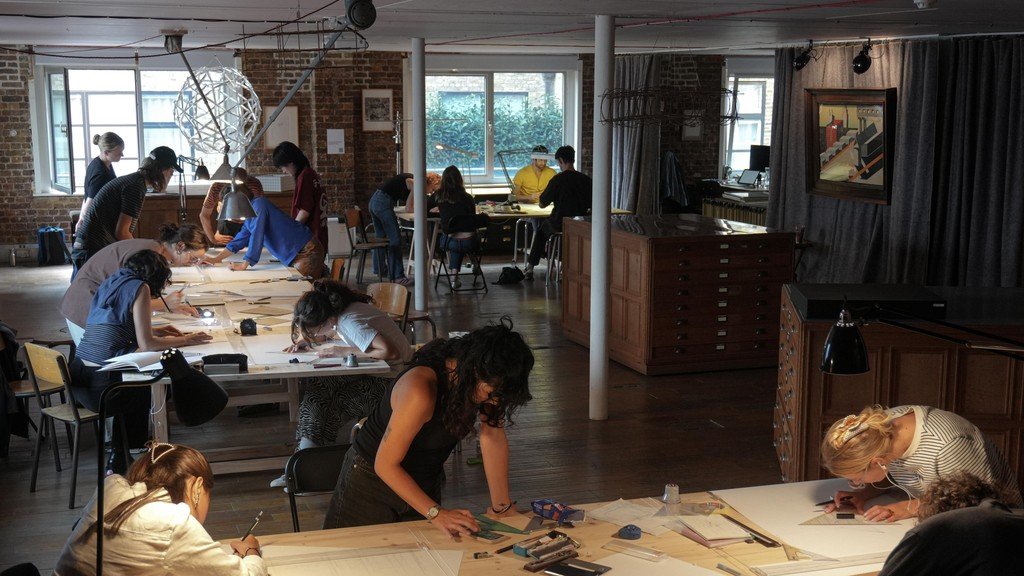
Projets de Master 2025 Exhibition and reviews The 2025 Master Projects Exhibition showcases the work of EPFL architecture students as they confront the material, social, and territorial challenges of today’s world. Spread across three distinct areas, the exhibition showcases a diverse range of approaches: some projects delve into the use of local resources and traditional craftsmanship, working with materials such as wood or earth, or exploring self-building techniques. Others operate at larger scales, reimagining urban and territorial dynamics in light of environmental and societal shifts. A third group focuses on housing, both collective and individual, and on interventions within existing …
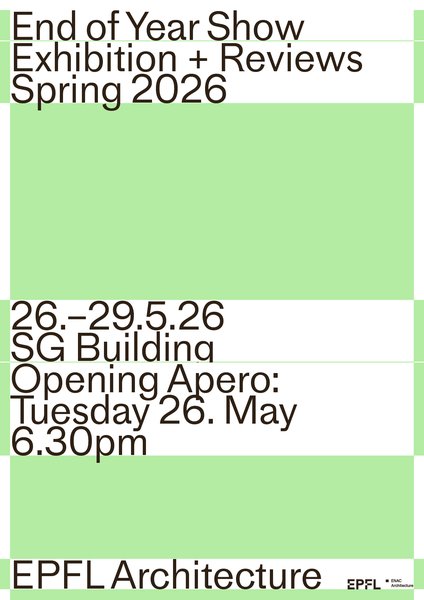
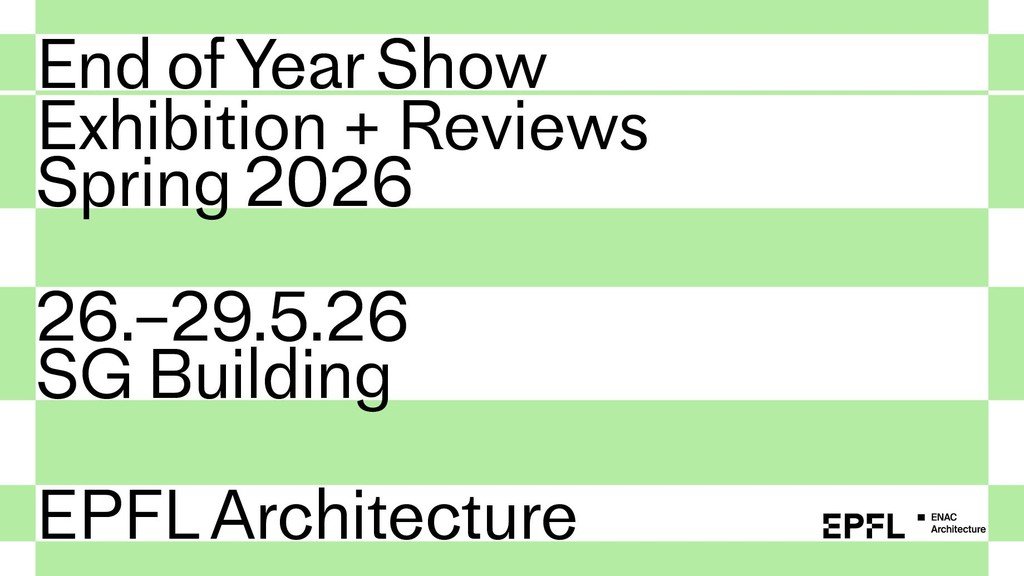
End of Year Show Spring 2025 Questioned and reevaluated, the very foundations of our disciplines find space for exploration, research, and critical dialogue within the design studios. The Semester Exhibition will open on Monday, May 26th. A lecture by BHSF Architekten will take place on Tuesday, May 27th, followed by an apero. Exhibition & Reviews Mo 26. May to Fr 30. May 2025 EPFL SG Building School Lecture Tu 27. May 2025, 18:30 BHSF Architekten Auditorium SG Exhibition Opening Apero Tu 27. May 2025, 19:30 Ada Lovelace Square
As an industry that relies on extracted materials and an intense use of resources, isn’t construction unsustainable by design? The pressure is increasing for the sector to diligently address the harm caused by the built environment, begging the question of whether real sustainability in architecture and planning is possible. As institutionalized and commodified greenwashing hollows out the term, how do architects and designers position their work beyond the inadequacy of a flattening universalistic understanding of sustainability? What forms of practice allow for accountable and revolutionized construction modes? How can we critically engage with technology as an ambivalent tool in the …
‘Concrete: Cosmetic and Care’ focuses on a heavy heritage: the mass of mainly post-war structures in reinforced concrete. It is THEMA contribution to The Great Repair exhibition. The post-war building boom covered the globe with an unprecedented amount of concrete. Production of every ton of cement alone releases 600 kg of carbon dioxide making the construction industry a substantial emitter of greenhouse gases. Much work in the post-war era focuses on the preservation challenges for iconic brutalist structures. Here instead, the aim is to strategize the maintenance and repair of reinforced concrete as ubiquitous, unspectacular, and unloved and raise awareness …
Les étudiant.es en Master, Vincent Digneaux, Solène Guisan et Vincent Kastl ont gagné le premier prix du concours étudiant d’architecture Sustainable is beautiful avec leur projet d’une passerelle modulable sur la rivière Chamberonne, à la fois lieu de passage et de rencontre. Une première expérience au plus proche de la réalité de la profession. Le Laboratoire d’architecture et technologies durables (LAST) propose depuis quelques années aux étudiantes et étudiants de la Faculté de l’environnement naturel, architectural et construit (ENAC) des concours d’idées baptisés Sustainable is beautiful, en partenariat avec des institutions privées ou publiques engagées dans des initiatives locales liées à la transition.
PRIX RIBA CHARLES JENCKS AWARD 2023
Le bureau Dogma, fondé en 2002 par Pier Vittorio Aureli, professeur associé à la section d’Architecture de l’EPFL (ENAC), et Martino Tattara, a été récompensé par l’illustre prix Charles Jencks 2023 du Royal Institute of British Architects (RIBA).
Créé en 2003 pour récompenser une personne (ou un bureau) ayant récemment apporté une contribution majeure à la fois à la théorie et à la pratique de l'architecture, ce prix prestigieux a distingué au fil des ans des architectes tels que Peter Eisenman, Zaha Hadid, Rem Koolhaas ou Jacques Herzog et Pierre de Meuron.
Housing is a major contributor to Switzerland's carbon footprint and energy consumption, but it is also a basic need. Research on climate change mitigation strategies has so far paid insufficient attention to households' preferences and their contribution to housing sustainability. Depicting residential preferences requires an understanding of the multilevel, context-specific, and interrelated determinants of the match between households and dwellings, which are made explicit in the residential mobility process.