The Architecture Hub gives access to the latest news of EPFL Architecture within the ENAC faculty, as well as presenting teaching and research programs, governance and people at the core of the community. The organizational structure of EPFL Architecture and the EPFL ecosystem is described in the glossary.
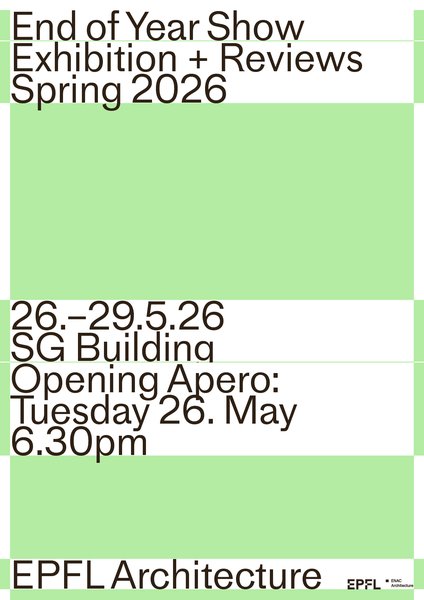
The final works of the Master’s students unfold as the outcome of individual journeys of research, exploration, and design. Each project traces its own path, yet together they open a shared field of questions about architecture today, spanning territory and public space, housing, industrial and cultural heritage, and architecture in the mountains. As the Final Juries take place, each project enters into dialogue with invited critics and faculty, revealing not only proposals, but also the questions, intentions, and explorations that shaped them. Dates Final Juries: 8.-15.7.26 Exhibtion: 8.-30.7.26 Venue Rolex Learning Center EPFL, Lausanne Final Juries Timetable ↗︎ Credits Projects: …
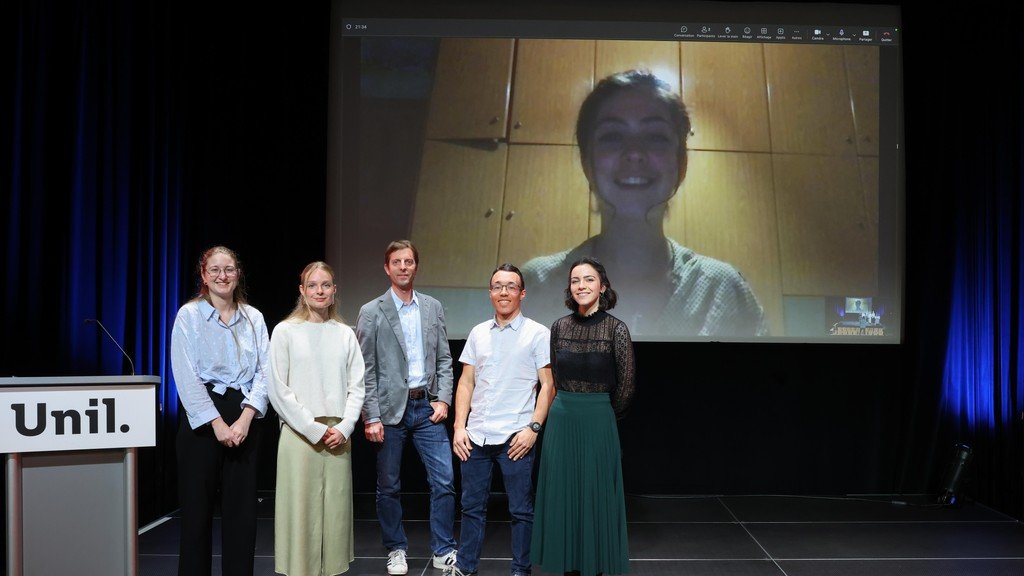
A summer school taking place this September will bring together EPFL and ETH Zurich PhD students to explore how uncertainty can become a productive resource in design and fabrication through a hands-on construction robotics challenge. The program combines lectures in architecture, robotics, and work psychology with the full-scale construction of a timber structure from irregular timber stock, using an ABB industrial robot in a human-robot fabrication workflow. No previous experience in construction robotics is required, only curiosity. More details, including the program, dates, and registration information, are available on the website: https://cap-uncertainty.epfl.ch/ For questions, please contact: cap-uncertainty@epfl.ch
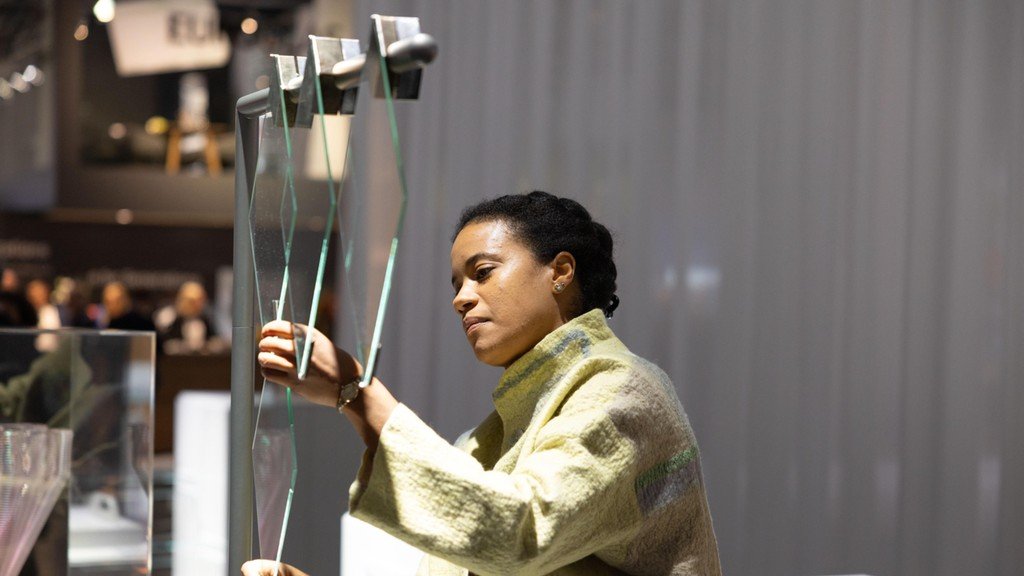
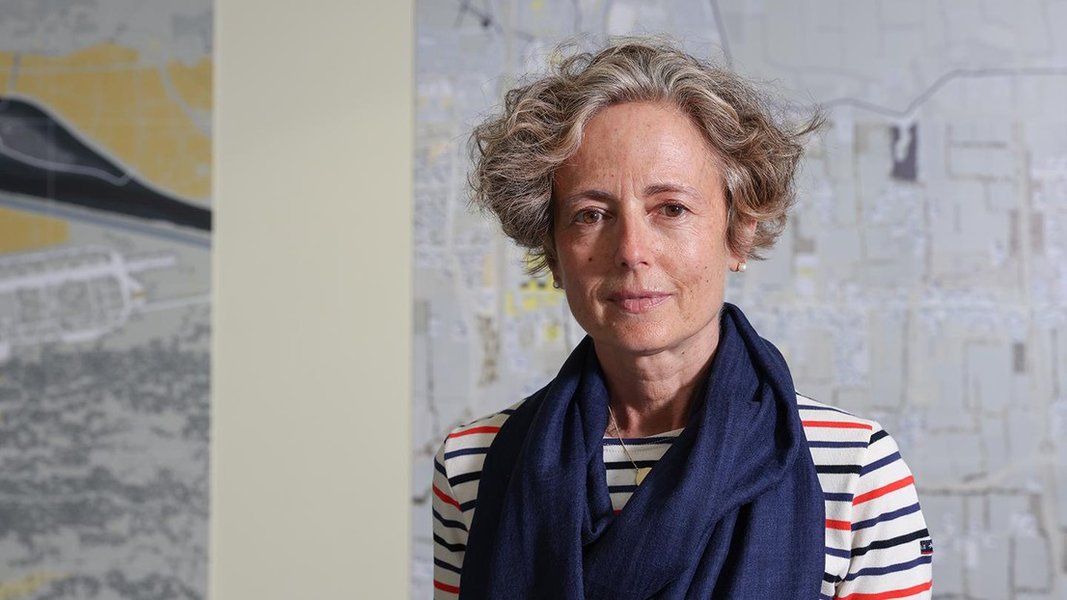
06.05.26 - Portrait of Rebecca Hartwell, new Tenure-Track Assistant Professor. A material scientist & engineer working at the intersection of materials science, architecture, and sustainability, she joins EPFL Architecture and will lead the MATR Lab (Materials in Transition Laboratory) at the Smart Living Lab in Fribourg. Previously Postdoctoral Researcher at Delft University of Technology in the Netherlands, she has been appointed Tenure Track Assistant Professor of Architecture in the Institute of Architecture and the City, part of the ENAC Faculty. At EPFL, she will lead the MATR Lab (Materials in Transition Laboratory) at the Smart Living Lab in Fribourg. Rebecca …
30.04.26 - Aurélie Terrier is among the winners of the Swiss National Science Foundation’s (SNSF) 2026 Scientific Image Competition. An architect and archaeologist at EPFL's Arts of Science Laboratory (LAPIS), she captured researchers conducting an impressive measurement session that combines modern and traditional tools. This is a picture of someone taking a picture, although we can’t see the object being photographed. Two colleagues, safely harnessed, seem to be enjoying themselves as they stand on scaffolding over 15 meters off the ground and skillfully manipulate a long extension pole fitted with a camera. They’re exploring the inaccessible heights inside the Temple …
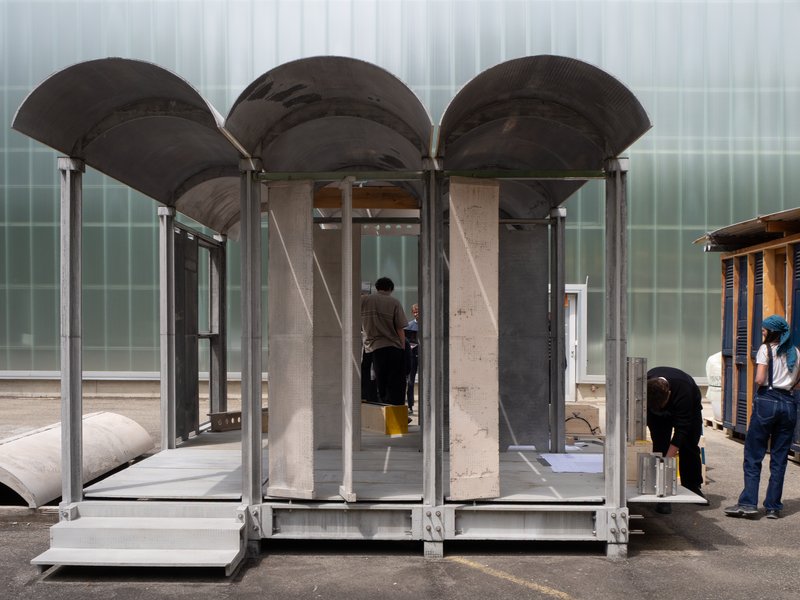
This research-through-making project explores the use of innovative Textile Reinforced Concrete (TRC), a high-performance material in which carbon fibres are embedded in a cementitious matrix cast with low-clinker-content binders, such as LC3. By combining these sustainable binders with the high efficiency of the reinforcing material, TRC significantly reduces the ecological footprint of construction by minimizing material usage and lowering energy consumption. This technology enables the creation of exceptionally thin, highly durable, and thus sustainable structures. The project aims to further investigate the structural, architectural, environmental, and social dimensions of TRC and its applications, particularly in the context of a new …
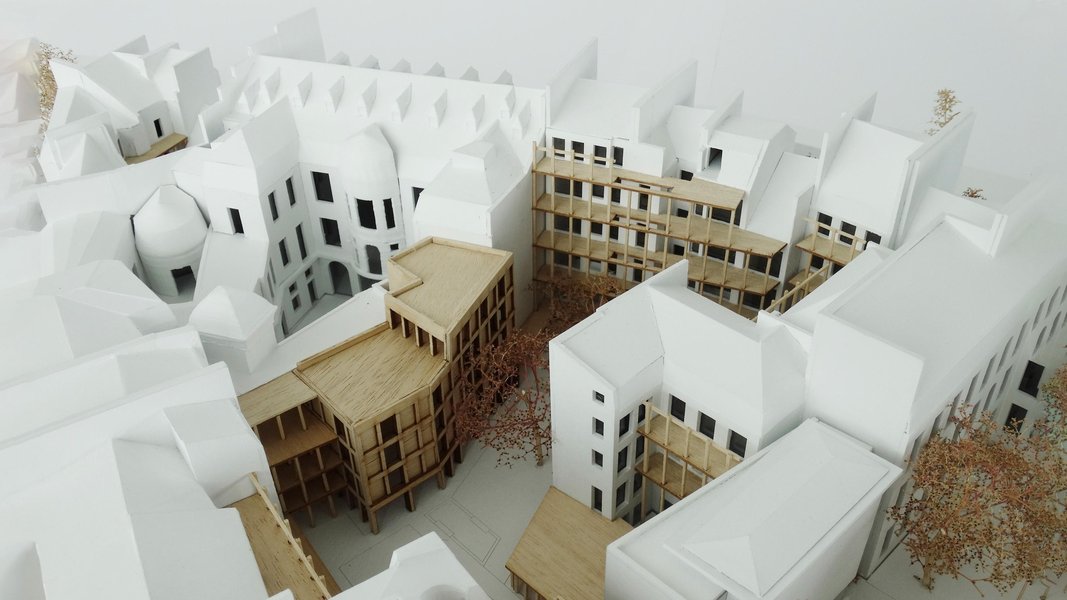
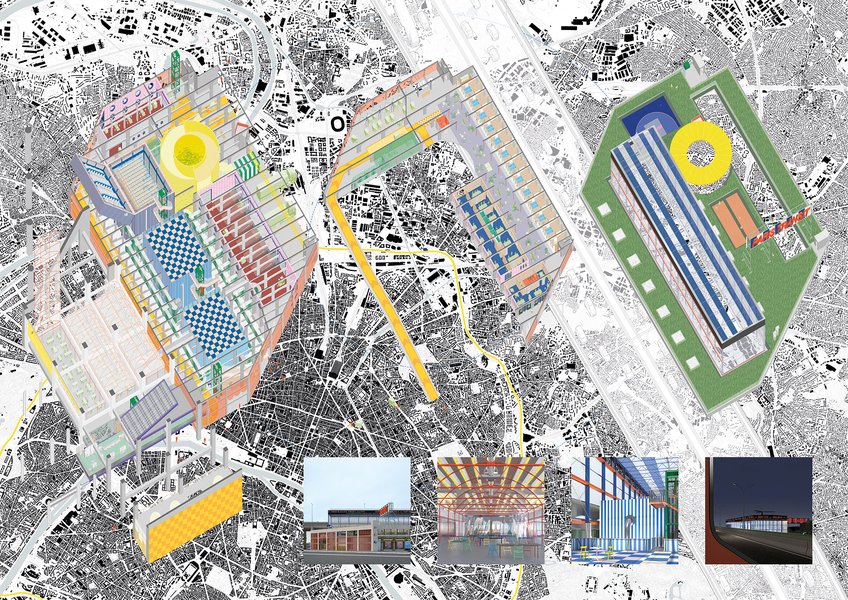
This semester’s exhibition brings together work developed across the architecture design studios at EPFL. The projects reflect a wide range of questions, methods, and positions explored throughout the term. The images document the exhibition as it unfolded, showcasing student work through models, drawings, photographs, and digital media. They capture both the variety of approaches across studios and the shared moment of presentation and exchange. The exhibition was made possible by the commitment of the students and teaching teams. Their engagement and openness to discussion continue to shape the culture of architectural education at EPFL. ↗︎ Presentations of the design studio …
EPFL architecture graduates, Vincent Digneaux, Solène Guisan and Vincent Kastl, were crowned winners of the Sustainable is Beautiful student architecture prize for their modular footbridge over the Chamberonne river. Designing the structure, which serves as both a crossing and a meeting place, gave them their first taste of life as an architect. Several years ago, the Laboratory of Architecture and Sustainable Technologies (LAST) at EPFL’s School of Architecture, Civil and Environmental Engineering (ENAC) launched Sustainable is Beautiful, a competition run in partnership with public and private organizations involved in green-transition projects, to help equip budding architects for their future role.
WINNER OF THE 2023 RIBA CHARLES JENCKS AWARD
The Dogma practice, founded in 2002 by Pier Vittorio Aureli, associate professor at the EPFL Architecture Department (ENAC), and Martino Tattara, has been awarded the prestigious Charles Jencks 2023 Prize by the Royal Institute of British Architects (RIBA).
Created in 2003 to reward an individual (or office) who has recently made a major contribution to both the theory and practice of architecture, this prestigious prize has distinguished architects such as Peter Eisenman, Zaha Hadid, Rem Koolhaas, Jacques Herzog and Pierre de Meuron over the years.
Housing is a major contributor to Switzerland's carbon footprint and energy consumption, but it is also a basic need. Research on climate change mitigation strategies has so far paid insufficient attention to households' preferences and their contribution to housing sustainability. Depicting residential preferences requires an understanding of the multilevel, context-specific, and interrelated determinants of the match between households and dwellings, which are made explicit in the residential mobility process.